Vande Mataram: National Song of India
Contents
Vande Mataram: The Immortal Hymn of India’s Freedom Struggle
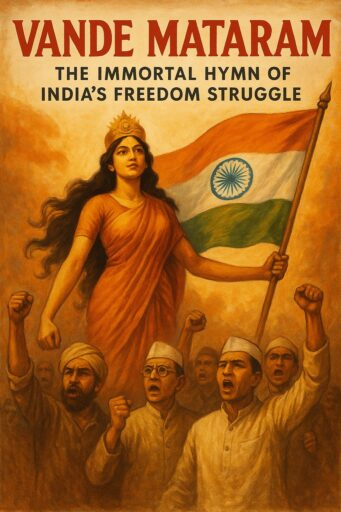
Vande Mataram, meaning “I bow to thee, Mother,” stands as one of the most powerful and iconic compositions in India’s history. This sacred verses of devotion to the motherland became the rallying cry of millions during India’s struggle for independence. Composed by Bankim Chandra Chatterjee in 1870s and first sung publicly by Rabindranath Tagore in 1896, Vande Mataram transformed from a literary creation into a revolutionary mantra that shook the foundations of British colonial rule.
The Composer: Bankim Chandra Chatterjee
Life and Legacy

Bankim Chandra Chatterjee (1838–1894) was one of the most prominent intellectuals and literary figures of 19th-century Bengal. A distinguished novelist, poet, and essayist, he is widely regarded as the architect of modern Bengali prose and a visionary thinker who laid the foundational principles for India’s emerging nationalist movement.
Chatterjee was a product of his era—witnessing colonial subjugation since childhood and recognizing the need for India to reclaim its ancient spiritual heritage. Unlike Western-influenced intellectuals of his time, Chatterjee believed that India’s salvation lay in rediscovering and reviving its own cultural roots rather than imitating colonial powers. He championed what became known as the Hindu Renaissance, a movement that sought to infuse Indian consciousness with pride in its civilizational achievements.
His literary genius earned him the title of “Sahitya Samrat” (Emperor of Literature) in Bengali. Rabindranath Tagore himself, perhaps the greatest writer of that era, considered Chatterjee his mentor and wrote: “Bankim Chandra had equal strength in both his hands; he was a true Sabyasachi (ambidextrous). With one hand, he created literary works of excellence; and with the other, he guided young and aspiring authors.”
The Philosophy Behind Vande Mataram
Chatterjee identified two critical deficiencies in Indian society that prevented national unity. First, there was an absence of a common linguistic and cultural medium through which diverse peoples could express their collective identity. Second, there was a profound emotional disconnection between Indians and their motherland—a psychological void created by centuries of foreign rule.
Vande Mataram addressed both these gaps. Composed in Sanskritised Bengali, the poem transcended linguistic and regional boundaries, giving every Indian—regardless of language or region—a medium to express their devotion to the motherland. By personifying India as a mother goddess, Chatterjee created an emotional anchor that unified Indians across caste, creed, and region.
Chatterjee’s vision was revolutionary. He rejected the British narrative of Indian history as absurd and encouraged Indians to look beyond the glorification of Mughal and colonial narratives. In his novel Anandamath, where Vande Mataram appears, Chatterjee portrayed India’s sacred history through an indigenous lens, emphasizing that true freedom could only come through reconnection with India’s spiritual foundations. 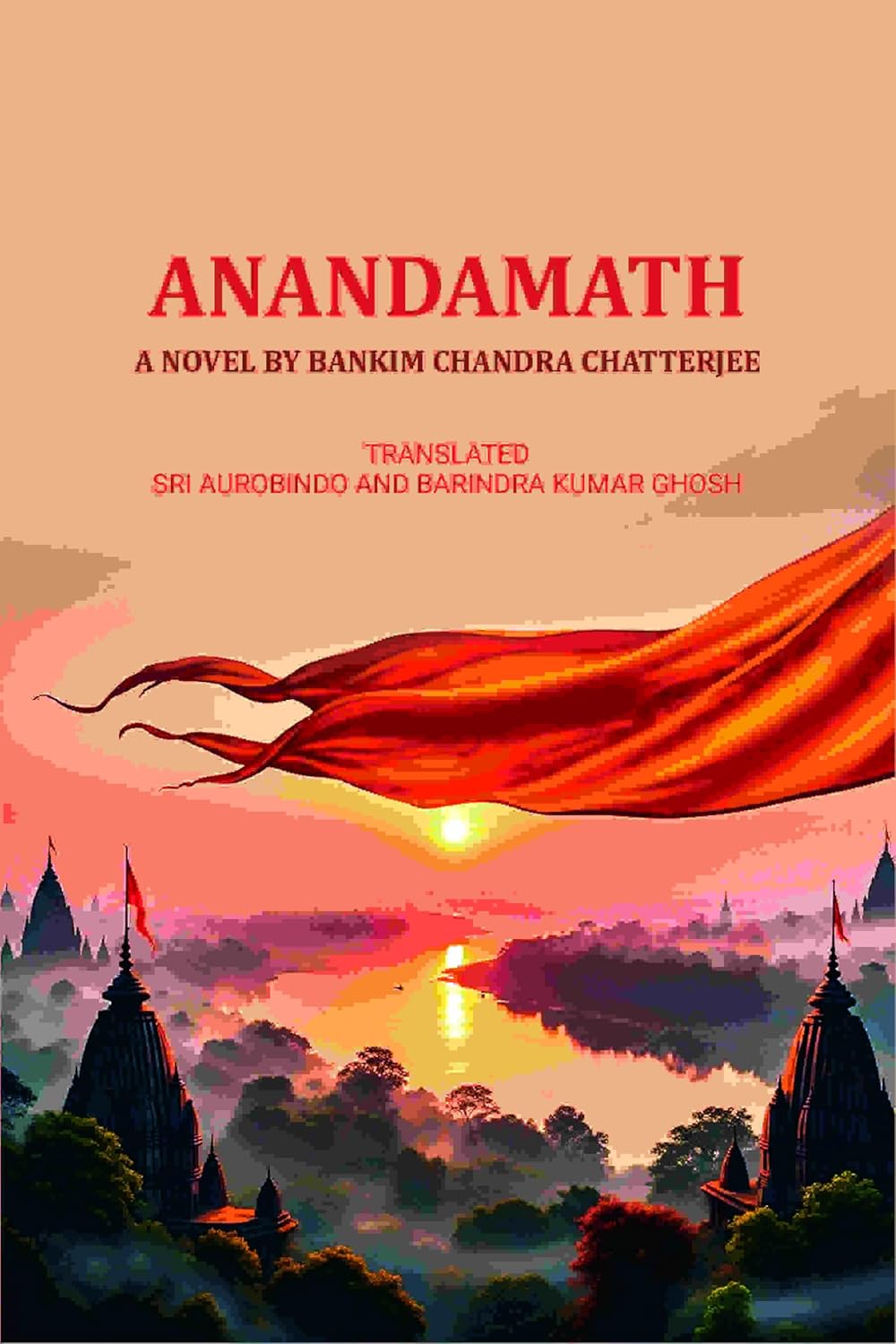
The Poem’s Composition and Context
From Novel to Revolutionary Anthem
Vande Mataram first appeared in Bankim Chandra Chatterjee’s novel Anandamath, published in 1882. The novel tells the story of ascetics who renounce worldly life and dedicate themselves to the service of the motherland. These ascetics, inspired by a spiritual teacher named Satyanand, sing Vande Mataram as they organize resistance against foreign rule.
The song’s context within the novel is explicitly revolutionary. The ascetics view their motherland as enslaved and needing liberation—a metaphor for India under colonial rule. By framing the struggle in spiritual and emotional terms, Chatterjee transformed what could have been a simple political song into a sacred invocation that resonated with India’s deepest spiritual traditions.
The First Public Performance
The pivotal moment came on September 20, 1896, when Rabindranath Tagore sang Vande Mataram at the Kolkata session of the Indian National Congress. This single performance marked a watershed moment in Indian nationalism. Tagore’s rendition gave the song an almost sacred quality, elevating it from a literary creation to a national prayer.
Following Tagore’s performance, singing the first two stanzas of Vande Mataram became standard practice at Congress meetings and political gatherings. The song spread from Bengal to all corners of India, becoming the heartbeat of the independence movement.
Role in the Indian Freedom Struggle
Symbol of Resistance and National Awakening
Between 1896 and 1947, Vande Mataram became far more than a song—it transformed into a political weapon, a spiritual force, and the emotional embodiment of Indian nationalism. The British colonial authorities quickly recognized its power and the threat it posed to their rule.
The song served multiple purposes in the freedom struggle. It was sung at massive public gatherings and processions, chanted as a slogan at protests and demonstrations, and recited by freedom fighters before their imprisonment or execution. The very act of singing it became an act of defiance against colonial authority. Beyond its function as a rallying cry, Vande Mataram infused the independence movement with cultural pride and spiritual zeal, transforming a political struggle into a moral crusade for national liberation.
Historical Incidents and Movements
The Prabhat Pheris (Morning Processions): In October 1905, a Bande Mataram Sampradaya (society) was founded in North Calcutta with a specific mission: to promote the idea of the motherland as a spiritual duty. Every Sunday, society members organized Prabhat Pheris (morning processions) through the streets, singing Vande Mataram and collecting voluntary contributions from the public in support of the motherland. Rabindranath Tagore occasionally joined these processions, lending his voice and prestige to the movement.
The Lahore Protest (May 1907): When Swadeshi leaders were arrested at Rawalpindi, young protesters in Lahore organized a defiant march. Raising the slogan Vande Mataram, they protested colonial oppression despite the threat of brutal police repression. Their fearless chanting of the song reflected the growing spirit of resistance spreading across India.
The Tuticorin Strike (February 27, 1908): Around a thousand workers at the Coral Mills in Tuticorin, Tamil Nadu, went on strike in solidarity with the Swadeshi Steam Navigation Company and against repressive colonial actions. They marched through the streets late into the night, chanting Vande Mataram as a mark of protest and patriotism—demonstrating that the song had transcended its regional origin to become a pan-Indian symbol.
The Vande Mataram Movement in Gulbarga (1938): In the Hyderabad-Karnataka region, students from Osmania University, Aurangabad Intermediate College, and Gulbarga University participated in a major student-led movement. When British authorities banned the song on November 16, 1938, students defiantly sang it on November 28, leading to house arrests and rustication. The students’ persistent resistance demonstrated the song’s enduring power as a symbol of Indian aspirations for freedom.
“The Flag of Indian Independence” or the “Berlin Committee Flag” (August 22, 1907): Freedom fighter Madam Bhikaji Cama unfurled the first Indian tricolour flag on foreign soil in Stuttgart, Germany—a historic act that drew international attention to India’s independence movement. The flag, designed by Cama and Shyamji Krishna Varma, had the words Vande Mataram inscribed on it, symbolizing India’s unbreakable spirit and call for freedom.
The British Ban and Its Paradox
Recognizing Vande Mataram’s revolutionary potential, the British colonial government moved to suppress it. The book Anandamath was banned, and public singing of the song was criminalized in many areas. The penalties were severe: imprisonment and heavy fines awaited those who publicly recited or sang it.
However, the British ban had an unexpected and paradoxical effect. By making Vande Mataram illegal, the colonial authorities only amplified its patriotic significance. The song transformed from a nationalist anthem into a symbol of moral resistance against tyranny. Freedom fighters and ordinary citizens repeatedly violated the ban by gathering in the presence of colonial officials and singing the forbidden song. This defiant act of singing became itself a form of resistance, with thousands willing to face imprisonment rather than abandon this expression of their love for the motherland.
Adoption as the National Song
The 1937 Decision
By the 1930s, Vande Mataram had become so integral to Indian nationalism that the Indian National Congress decided to formally recognize it. In October 1937, prior to independence, the Congress Working Committee made a crucial decision: the first two stanzas of Vande Mataram would be adopted as the National Song of India.
This decision, however, was not without controversy, particularly regarding Muslim participation in the independence movement and concerns about religious sensitivities.
Official Recognition After Independence
After India attained independence on August 15, 1947, and became a republic on January 26, 1950, Vande Mataram received official constitutional recognition. The first two stanzas were formally designated as India’s National Song by the Constituent Assembly in 1950—a distinction it maintains to this day.
It is important to note that Vande Mataram holds the status of National Song, not National Anthem. The National Anthem is Jana Gana Mana, which was also composed by Rabindranath Tagore. Both hold equal importance and deserve equal respect in India’s constitutional framework.
The Muslim Community and Vande Mataram: Contextual Understanding
Historical Origins of the Controversy
The controversy surrounding Muslim participation in singing Vande Mataram does not originate from the modern political period. Its roots lie in the historical context and specific verses of the composition itself.
Religious and Textual Concerns
The core issue stems from the religious and textual content of the song. While the first two stanzas describe India’s natural beauty and geographical features in poetic terms, the later stanzas (particularly the fourth stanza) contain imagery that presents the motherland using Hindu theological concepts.
Specifically, verses such as “Tvam hi Durga Dashapraharandharini” (You are the goddess Durga with ten weapons) and references to Lakshmi and Saraswati portray the motherland as divine goddesses. These verses use the iconography and language of Hindu religious devotion. Islam, being a strictly monotheistic religion, prohibits the worship or veneration of any being other than Allah. The concept of presenting anything other than God as an object of worship is considered shirk (polytheism), which is forbidden in Islamic theology.
The Contextual Concerns About Anandamath
Beyond the religious content of the song itself, concerns arise from the broader context of Anandamath, the novel in which Vande Mataram appears. The novel, set during a historical period of Indian resistance, portrays Muslim rulers as antagonists. Some interpretations of the novel have suggested anti-Muslim overtones, depicting the struggle for the motherland partly in terms of resistance to Muslim rule.
For the Muslim community, this historical and literary context created the perception that Vande Mataram was not merely a patriotic song but also a carrier of communal sentiment.
Political Weaponization of the Controversy
It is crucial to understand that the Vande Mataram controversy was not always a spontaneous expression of Muslim religious concerns. Scholars have documented that the controversy was partially weaponized for political purposes.
In 1937, when the Congress was considering making Vande Mataram the national song, the British colonial government raised objections, viewing it as offensive to Muslim sentiment. Viceroy Linlithgow instructed the Governor of Madras to use “every expedient of tact and persuasion” to convince the Congress to drop the song. It was only after the British government objected that Muhammad Ali Jinnah and the Muslim League took up the issue as a political cause.
In a 1938 speech, Jinnah stated: “They [the Congress] started in the Legislatures with a song of Vande Mataram, which is not only idolatrous but in its origin and substance a hymn to spread hatred for the Musalmans.” Historical analysis suggests that Jinnah raised the controversy for political reasons—to drive a wedge between the Hindu-majority Congress and Muslim constituencies, thereby strengthening the case for a separate Muslim state.
The 1937 Consensus Resolution
Recognizing these concerns, the Congress appointed a Song Committee in 1937 to address the Vande Mataram question. The committee included prominent figures such as:
Jawaharlal Nehru
Subhas Chandra Bose
Maulana Abul Kalam Azad (one of the most respected Islamic scholars of his time)
Narendra Deva
After careful consideration, the committee reached a historic consensus: The first two stanzas of Vande Mataram, which describe India’s natural geography and beauty without any religious imagery or theological concepts, could be sung by all Indians, including Muslims, without violating their religious beliefs.
This decision reflected the committee’s determination that patriotism and religious faith need not be in conflict. The first two stanzas, free from Hindu theological imagery, could serve as a national song that all communities could embrace.
Contemporary Muslim Perspectives
It is important to recognize that Muslim perspectives on Vande Mataram are diverse and do not represent a monolithic position.
Muslim Majority Support: The majority of Muslim citizens of India have accepted the first two stanzas of Vande Mataram and sing it without objection. Surveys and public statements by prominent Muslim leaders, including former Union Minister for Minority Affairs Salman Khursheed and numerous Muslim intellectuals, affirm that they see no conflict between singing the first two stanzas and their religious beliefs.
Religious Scholars’ Positions: While some orthodox religious organizations have issued fatwas (religious decrees) opposing the singing of Vande Mataram in its complete form, other Islamic scholars have argued that the first two stanzas are acceptable and that Muslims can sing them without compromising their faith.
Moderate Consensus: Most moderate Muslim and Hindu leaders agree that no person should be compelled or coerced to sing any song, whether Vande Mataram or Jana Gana Mana, as this would violate the fundamental right to freedom of conscience and religion guaranteed by the Indian Constitution.
Constitutional and Legal Framework
The Supreme Court of India has consistently maintained that while Vande Mataram holds an honored place as the National Song, there is no constitutional compulsion to sing it. The court has emphasized that:
The Constitution does not mention a “National Song”—only the National Anthem (Jana Gana Mana) and National Flag receive constitutional status.
Even for the National Anthem, the Supreme Court has held that attendance is compulsory in certain situations, but singing along is voluntary, not mandatory.
Citizens have a fundamental right to freedom of speech and conscience, which includes the right not to sing any particular song.
The court has consistently refused to mandate the singing of Vande Mataram in schools, colleges, or public institutions, recognizing that such compulsion would violate fundamental rights.
Vande Mataram Complete Lyrics and Translation
The complete Vande Mataram consists of six major stanzas. Below is presented the original text in Sanskrit/Sanskritised Bengali, followed by verse-by-verse English translation based on the acclaimed translation by Sri Aurobindo Ghosh.
Verse 1
Original:
वन्दे मातरम्!
सुजलां सुफलां मलयजशीतलां
शस्यश्यामलां मातरम्!
शुभ्रज्योत्सनापुलकितयामिनीं
फुल्लकुसुमितद्रुमदलशोभिनीं
सुहासिनीं सुमधुरभाषिणीं
सुखदां वरदां मातरम्!
English Translation:
I bow to thee, Mother!
Rich with thy hurrying streams,
Bright with orchard gleams,
Cool with thy winds of delight,
Dark fields waving, Mother of might,
Mother free.
Glory of moonlight dreams,
Over thy branches and lordly streams,
Clad in thy blossoming trees,
Mother, giver of ease,
Laughing low and sweet!
Mother, I kiss thy feet,
Speaker sweet and low!
Mother, to thee I bow.
Verse 2
Original:
सप्तकोटि कण्ठकलकलनिनादकरे
द्विसप्तकोटि भुजैर्धृतखर्परे
अबला केनो मा एतो बले
बहुबलधारिणी नमामि तारिणी
रिपुदलवारिणी मातरम्!
English Translation:
Who hath said thou art weak in thy lands
When the swords flash out in seventy million hands
And seventy million voices roar
Thy dreadful name from shore to shore?
With many strengths who art mighty and stored,
To thee I call Mother and Lord!
Thou who savest, arise and save!
To her I cry who ever her foeman drove
Back from plain and sea
And shook herself free.
Verse 3
Original:
त्वं विद्या त्वं धर्म त्वं ह्रदि त्वं मर्मम्।
त्वं हि प्राणाः शरीरे।
बाहुते त्वं मा शक्ति हृदये त्वं मा भक्ति।
तोमारै प्रतिमा गडि मन्दिरे-मन्दिरे॥
English Translation:
Thou art wisdom, thou art law,
Thou art heart, our soul, our breath.
Thou art love divine, the awe
In our hearts that conquers death.
Thine the strength that nerves the arm,
Thine the beauty, thine the charm.
Every image made divine
In our temples is but thine.
Verse 4
Original:
त्वं हि दुर्गा दशप्रहरणधारिणी,
कमला कमलदलविहारिणी,
वाणी विद्यादायिनी,
नमामि त्वां कमलाम्,
अमलां अतुलाम्।
सुजलां सुफलां मलयजशीतलां
शस्यश्यामलां मातरम्!
English Translation:
Thou art Durga, Lady and Queen,
With her hands that strike and her swords of sheen,
Thou art Lakshmi lotus-throned,
And the Muse a hundred-toned,
Pure and perfect without peer,
Mother, lend thine ear,
Rich with thy hurrying streams,
Bright with thy orchard gleams,
Dark fields waving, Mother of might,
Mother free.
Verse 5
Original:
श्यामलां सरलां सुस्मितां भूषिताम्
धरणीं भरणीं मातरम्!
English Translation:
Dark and lovely, simple and smiling, adorned with grace,
Nourisher of all, Mother of all, Motherland!
I bow to thee, Mother!
Mother sweet, I praise thee,
Mother great and free!
Verse 6
Original:
वन्दे मातरम्!
English Translation:
I bow to thee, Mother!
Discover more from Simplified UPSC
Subscribe to get the latest posts sent to your email.