Economics of Animal Rearing
Contents
Economics of Animal Rearing
Core takeaway:
Economics of Animal Rearing: The livestock and dairy–poultry sector has become the most dynamic part of Indian agriculture, contributing around one‑third of agriculture GVA and about 5.5%of total GVA, growing faster than crops and acting as a critical shock‑absorber for small and marginal farmers’ incomes.
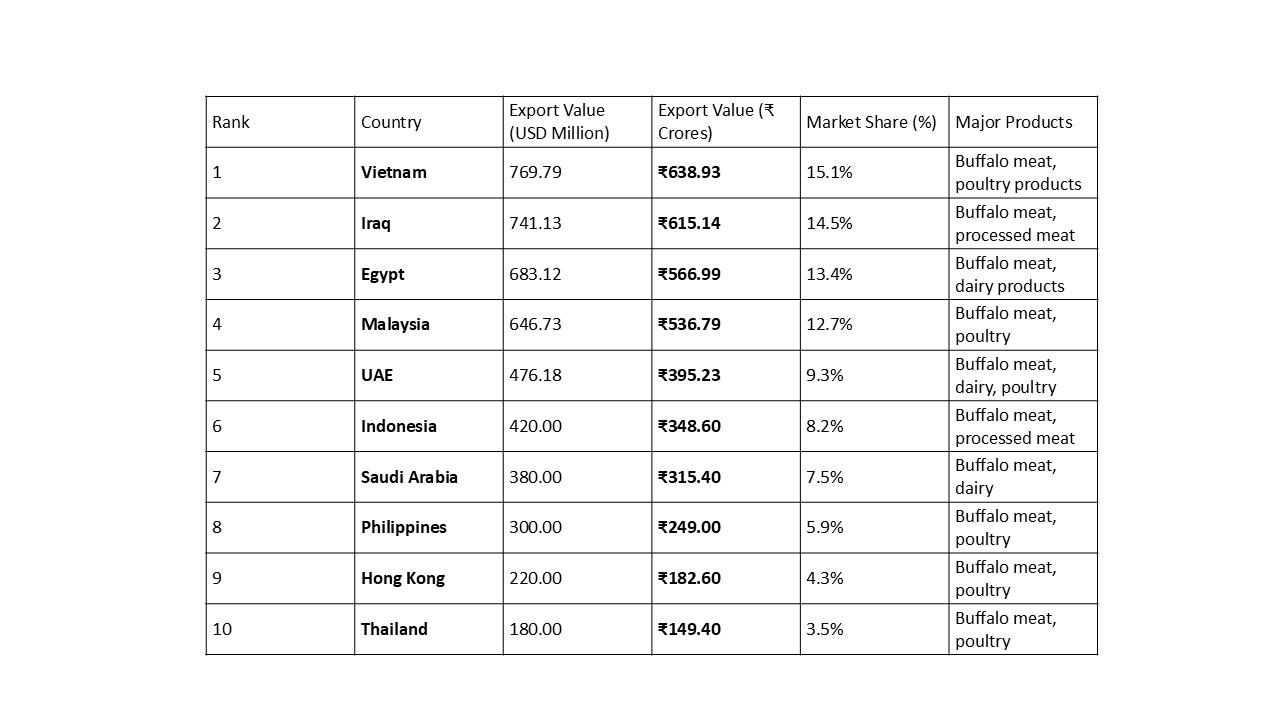
India’s Animal-Related Exports by Country (2024-25)
1. Concept and Scope
Animal rearing (animal husbandry) includes:
Dairy (cattle, buffalo)
Small ruminants (sheep, goats)
Pigs
Poultry (eggs and broilers)
Other livestock (camels, yaks, mithun, etc.)
Allied activities: fodder production, feed industry, veterinary services, processing and value addition (ghee, cheese, meat processing, leather, etc.)
In exam answers, always link animal rearing to:
Rural livelihoods and non‑farm employment
Nutritional security (milk, eggs, meat)
Inclusive growth and women empowerment
Climate resilience and risk diversification
- Export industry
2. Structural Importance – Key Data and Trends
2.1 Macro contribution
Livestock sector grew at a compound annual growth rate (CAGR) of about 12.99% during 2014–15 to 2022–23
Its share in agriculture and allied sector GVA (current prices) increased from about 24.3%in 2014–15 to around 30.2% in 2022–23
Contribution of livestock to overall GVA reached around 5.5% in 2022–23
Implication for answers: livestock is the engine of growth within agriculture, offsetting stagnation in crop income.
2.2 Livestock population (20th Livestock Census, 2019)
Total livestock population: 536.76million, up 4.8% over 2012.
Bovine population (cattle, buffalo, mithun, yak): 303.76 million.
Rural areas account for about 95.8%of livestock.
20th Census also shows:
Bovine numbers increased about 1%
Indigenous cattle declined by about 6%, while crossbred/exotic cattle increased 27%, contributing a higher share to milk production.
2.3 Milk sector
India is the world’s largest milk producer, contributing about 24.76% of global production.
Total milk production in 2023–24: about 239.3 million tonnes, up from 146.3 million tonnes in 2014–15 (CAGR around 5.6%).
Per capita milk availability in 2023–24: about 471grams/day vs world average around 329 grams/day (2023 estimate).
2.4 Poultry, eggs and meat
Egg production 2023–24: around 142.77 billion eggs; India ranks second globally in egg production.
Per‑capita egg availability: about 103eggs per year.
Egg output in 2022–23: about 138.38 billion.
Poultry meat production 2022–23: around 5 million tonnes, contributing roughly 51% of total meat production.
2.5 Rural household dependence
Situation Assessment Survey (NSS 77th Round): agriculture households constitute about 54% of rural households; majority are small and marginal.
Livestock ownership is widespread among small holders, especially in rain‑fed, drought‑prone and tribal regions; livestock income is a rising share of farm income in many states.
3. Key Data Table for Quick Revision
Use this table in answers to enrich introductions and conclusions.
| Indicator | Latest / Key Figure | Period / Source |
|---|---|---|
| Livestock share in agriculture & allied GVA (current prices) | Rose from about 24.3%to around 30.2% | 2014–15 to 2022–23 |
| Livestock share in total GVA | About 5.5% | 2022–23 |
| Livestock GVA growth | CAGR about 12.99% | 2014–15 to 2022–23 |
| Total livestock population | 536.76 million | 20th Census, 2019 |
| Bovine population | 303.76 million | 2019 |
| Total milk production | 239.3 million tonnes | 2023–24 |
| Milk share in world production | About 24.76% | Latest estimates |
| Per‑capita milk availability | 471 g/day (India) vs 329 g/day (world) | 2023–24 |
| Total egg production | 142.77 billion | 2023–24 |
| Per‑capita egg availability | 103 eggs/year | 2023–24 |
| Poultry meat production | ~5 million tonnes (~51% of total meat) | 2022–23 |
| Fodder deficit | Deficit of about 11.24% green, 23.4% dry, 28.9% concentrates | ICAR‑IGFRI estimates |
4. Why Animal Rearing is Economically Critical
4.1 Income diversification and risk management
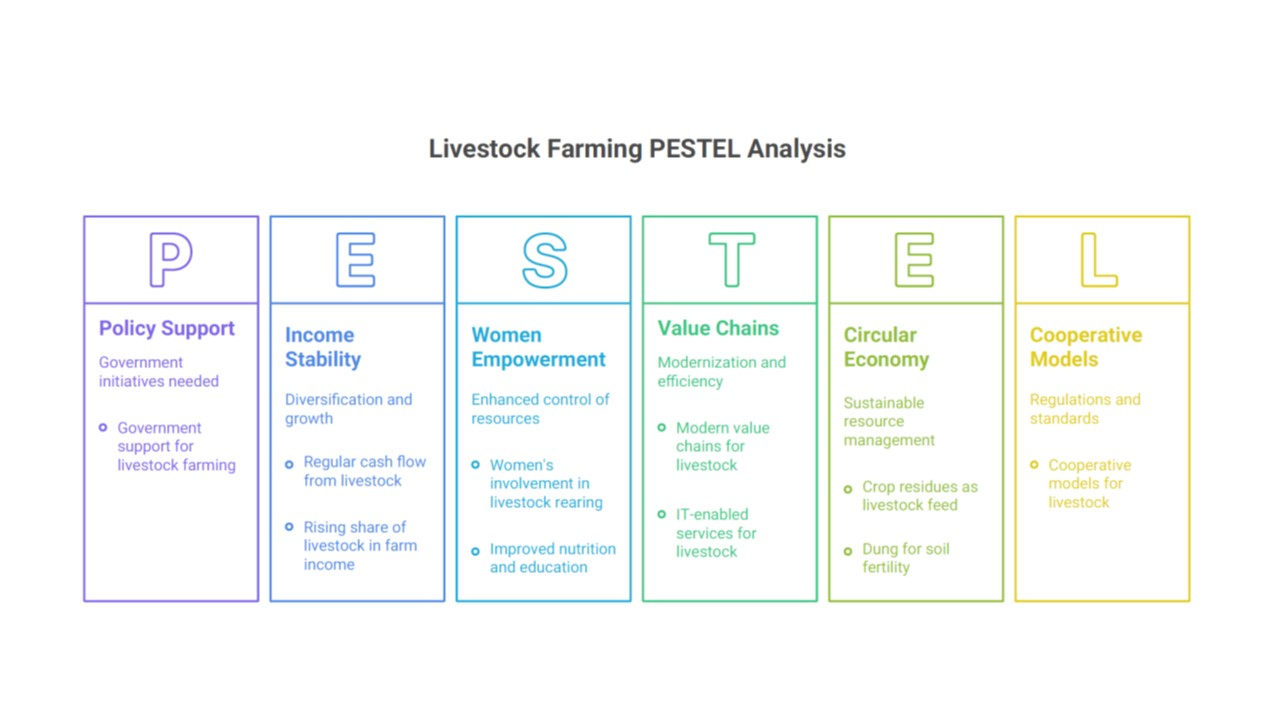
Crop incomes are volatile due to monsoon dependence, price swings and climate shocks. Livestock provides regular cash flow through daily milk, weekly egg sales, etc., smoothing income.
Empirical work shows the share of livestock in farm income has been rising over time as households diversify away from exclusive crop dependence.
4.2 Inclusive, pro‑poor and pro‑women growth
Ownership of a few animals is feasible even for land‑poor and landless households; barriers to entry are lower than mechanized cropping.
Women are heavily involved in feeding, milking, cleaning and small ruminant rearing; income from milk and eggs directly enhances women’s control over resources, improving nutrition, education and health outcomes.
4.3 Employment generation and non‑farm linkages
Livestock generates employment in rearing, input supply (feed, medicines), processing (chilling plants, dairy processing, slaughtering, packaging), and marketing (collection centres, cold chains).
Co‑operative models (e.g., dairy co‑ops) and modern value chains create local non‑farm jobs in transport, testing, extension, IT‑enabled services.
4.4 Nutritional security
Livestock products are dense sources of protein, fats, vitamins and minerals: key to tackling hidden hunger, especially in children and women.
Rising per‑capita availability of milk and eggs supports national nutritional programmes and school meals.
4.5 Linkages with crop sector and circular economy
Crop residues (straw, husk, bran) become feed; dung supports soil fertility (organic manure, vermicompost) and biogas/energy.
Integrated farming systems (crops + livestock + fisheries, etc.) reduce waste, recycle nutrients, stabilise incomes and improve resilience, which is repeatedly tested in questions on farming systems.
5. Economics at the Farm Level
In answers, the economics of animal rearing can be framed through costs, returns and risks.
5.1 Cost structure
Major cost components:
Feed and fodder (often 60–70% of operational cost in dairy and poultry) – highly sensitive to fodder deficit and feed price inflation.
Animal purchase and breeding (capital cost)
Housing and infrastructure (sheds, milking parlours, poultry sheds)
Veterinary care, vaccination, insurance
Labour (family and hired)
ICAR estimates a national deficit of about 11.24%in green fodder, 23.4%in dry fodder and 28.9% in concentrates, which raises feed costs and depresses productivity.
5.2 Revenue and profitability
Sources of revenue:
Primary products: milk, meat, eggs, wool
By‑products: manure, dung cakes, biogas slurry, hides and skins
Profitability drivers:
Productivity per animal (milk yield per day, egg laying rate, feed‑conversion ratio)
Access to organised procurement (co‑ops, private dairies, integrators) vs distress sale in unorganised markets
Value addition (chilled milk, paneer, cheese, branded eggs, processed meat)
Seasonality: lean vs flush season for milk, festival‑driven spikes for meat and eggs
Studies on distressed districts show dairy (e.g., two buffaloes) and goat rearing (e.g., small flocks) can significantly enhance net farm income when linked with formal markets and credit.
5.3 Role in doubling farmers’ income
Committees and policy papers on farmers’ income emphasise moving from low‑value cereals to high‑value agriculture (livestock, horticulture, fisheries) as a key pathway for real income growth.
6. Challenges and Constraints
These points are crucial for “Discuss the issues/challenges and suggest measures” type questions.
6.1 Feed and fodder shortage
Significant national fodder deficit: approximately 11.24% in green fodder, 23.4% in dry fodder and 28.9% in concentrates.
Causes: shrinking common grazing lands, urbanization, diversion of land to commercial crops, low productivity of pastures, lack of quality fodder seed.
Outcome: high feed costs, low milk yield, poor reproductive health of animals.
6.2 Low productivity and breed issues
Average milk yield of indigenous cattle remains low compared to crossbred and exotic breeds; crossbreds now contribute a disproportionately high share of milk.
Weak breeding services, low artificial insemination coverage, and poor extension limit genetic improvement.
6.3 Disease burden and veterinary infrastructure
Inadequate veterinary infrastructure, low vaccination coverage and weak disease surveillance increase mortality and morbidity in livestock.
Climate change is expanding the range of vector‑borne diseases (e.g., bluetongue, theileriosis, lumpy skin disease), complicating control efforts.
6.4 Climate change vulnerability
Rising temperatures and heatwaves cause heat stress, reducing milk yield by an estimated 3–5 litres per day in crossbred cows in severe conditions, and impairing fertility.
Water stress and irregular monsoons affect fodder and drinking water availability, impacting productivity and reproduction.
6.5 Market and value‑chain issues
Large share of milk and meat is still marketed through informal channels with low price realisation and lack of cold chains.
Price volatility in poultry and milk; episodes where farm‑gate prices fall below cost of production.
Limited processing capacity in many regions; poor infrastructure in slaughterhouses and cold storage.
6.6 Credit, insurance and institutional gaps
Smallholders face difficulty in accessing formal credit for buying animals, sheds, and feed; collateral requirements and procedural hurdles persist.
Livestock insurance penetration is low; many farmers remain unprotected against disease outbreaks or death of productive animals.
6.7 Environmental and social concerns
Localised water pollution, greenhouse gas emissions (enteric methane, manure management), and land degradation where stocking density is high.
Conflicts around grazing rights and stray cattle, particularly where strict slaughter laws increase unproductive cattle numbers.
7. Government Initiatives and Policy Framework
While writing answers, cluster schemes under clear sub‑headings (breeding, health, infrastructure, markets, inclusion).
7.1 Breeding and productivity enhancement
Rashtriya Gokul Mission (RGM):
Implemented since 2014 for development and conservation of indigenous bovine breeds.
Focus on high genetic merit bulls, artificial insemination expansion, Gokul Grams (integrated cattle development centres) and scientific conservation.
National Livestock Policy (2023):
Envisions using livestock as a driver of rural transformation, targeting an additional ₹2.5 trillion to livestock GVA by 2030 and sustaining high growth in the sector.
7.2 Feed and fodder development
National Livestock Mission (NLM) with a sub‑mission on feed and fodder:
Supports fodder seed production, fodder as a cash crop, silage making and improved pasture management.
Animal Husbandry Infrastructure Development Fund also supports modern feed manufacturing units and testing labs to ensure quality feed.
7.3 Animal health and disease control
Large‑scale vaccination and disease control programmes (e.g., for FMD, brucellosis, lumpy skin disease) are being implemented, along with strengthening veterinary hospitals, mobile clinics and diagnostic labs.
7.4 Dairy and processing infrastructure
Dairy Processing and Infrastructure Development Fund (DIDF) and related schemes:
Finance expansion of processing capacity, chilling infrastructure, and modernization of dairy plants; dozens of projects sanctioned across states, adding significant processing capacity.
Support for dairy co‑operatives and Farmer Producer Organisations (FPOs) to integrate small producers into organised value chains.
7.5 Poultry, small ruminants and entrepreneurship
Under NLM and other schemes, direct subsidies are provided for poultry farms, sheep and goat breeding units, piggeries, and feed and fodder units to promote rural entrepreneurship and employment.
7.6 Digital and institutional innovations
Promotion of digital platforms, mobile advisory, and ICT tools for animal health, breeding and market information.
Convergence with credit schemes (e.g., Kisan Credit Card for animal husbandry) to expand access to formal finance.
8. Way Forward – Reform Agenda
These points are useful in “Suggest suitable measures” or “Way forward” parts:
Fodder revolution:
Develop high‑yielding fodder varieties, incentivize fodder crops in irrigated areas, preserve crop residues, and promote silage and fodder banks, especially in drought‑prone districts.
Productivity enhancement:
Expand quality breeding services, AI coverage and genomic selection; focus on balanced breeding between productivity and resilience.
Strengthened veterinary and extension services:
Increase vet: animal ratio, mobile clinics, tele‑veterinary services; improve disease surveillance and universal vaccination against major diseases.
Climate‑resilient livestock systems:
Heat‑tolerant breeds, climate‑smart housing (shading, cooling), water‑efficient management, and disaster‑preparedness plans in drought‑ and flood‑prone regions.
Market reforms and value addition:
Modernize slaughterhouses, promote cold chains, branding and certification (organic, free‑range, A2 milk etc.), and encourage producer‑owned processing.
Financial inclusion and risk management:
Simplify livestock credit, expand interest subvention, scale up livestock insurance and create contingency funds for disease outbreaks.
Gender‑sensitive and inclusive policies:
Recognise women as joint owners of livestock assets, target them in training, credit and co‑operative membership, and support women‑led dairy and poultry enterprises.
9. Previous Year Mains‑Type Questions on this Theme
Use these for practice and to understand how the topic has been framed.
“Livestock rearing has a big potential for providing non‑farm employment and income in rural areas. Discuss suggesting suitable measures to promote this sector in India.” (2015)
“How far is Integrated Farming System (IFS) helpful in sustaining agricultural production?” (2019)
“What is Integrated Farming System? How is it helpful to small and marginal farmers in India?” (2022)
AGRICULTURE AND FOOD PROCESSING


Discover more from Simplified UPSC
Subscribe to get the latest posts sent to your email.